Dear colleagues, Dear friends,
I am pleased to announce you my PhD viva voce examination in geography, entitled:
“Singing in China, theory and fieldwork in music geography – A Shanghai case study and singing during the covid-19 pandemic”.
It will be held in French, the 28th of November 2023 from 1:00 PM in Jean-Baptiste Duroselle’s room in La Sorbonne and by videoconference. A videoconference link is now available with Zoom. You generally only have to click on the link https://us02web.zoom.us/j/86125755240?pwd=aWcwQkJpcklyNUkxaHNqakY2ZnpIUT09
The viva will be held in French. To make the organisation easier, please connect from 5 to 10 minutes before the viva’s beginning planned at 1:00 PM.
Abstract
In China, singing is an activity practiced by a large number of amateurs and professionals in various places. Perceived as a vector of morality, singing has been considered for several centuries as a powerful political tool by government power. The analyses carried out in this thesis aim to highlight the contemporary nature of this political dimension of singing, which is expressed both in urban development and in terms of the supervision of the population, particularly at times for crisis.
Situated within music geography and Urban Music Studies approaches, this thesis considers singing places as geo-indicators of the socio-political organisation and urban production of the Shanghainese metropolis. The study of singing places provides information on the construction of the city as being determined by the local authorities. In particular, singing can be examined within the framework of heritage and gentrification based on cultural reconstruction strategies. This evolution of the social and urban environment of the metropolis works in tandem with urban fabric. In particular, certain singers can be observed to appropriate public spaces, during the time of their activities.
The political dimension of singing appeared more pronounced during the management of covid-19 by the Chinese government. The analysis of the effects of this pandemic on the Chinese social and political space illustrates the persistence of singing as a means of communication and advocacy, mobilised both by the government and by population. The consequences of this crisis were also at the root of a reflection on the data collection primarily online, qualified here as “mediated fieldwork”.
Keywords: singing, music geography, socio-spatial dynamics, urban organisation and production, covid-19 pandemic, “online” fieldwork, political communication.
Best regards,
Sarah DEFOIN–MERLIN
Doctorante en géographie
UMR 8586 Prodig
Université Paris 1 Panthéon-Sorbonne – UFR 08
 Co-authored by Daniel Silver and Jonathan Bunce this project has been carried out as a collaboration between the University of Toronto – School of Cities and Wavelength music. The research findings underscore the importance of fostering an adaptable and resilient live music ecosystem in Ontario. The proposed policy recommendations aim to provide practical paths toward this goal, offering a transformative blueprint to uplift and revitalize the Ontario live music scene. This endeavour, although complex, holds the promise of a more vibrant and sustainable live music industry, resonating powerfully with the broader cultural and economic vibrancy of the province.
 Edited by Ola Johansson, Séverin Guillard and Joseph Palis this book
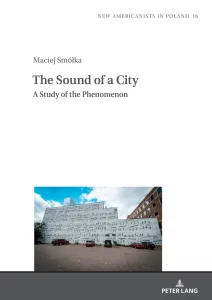 Maciej Smółka examines in his new publication the sound of a city in terms of the relationship between music and the cultural specificity of a given urban area. This cultural phenomenon becomes apparent when artists from a region create music, which indisputably linked to its place of origin, such as in the case of the Nashville Sound, the psychedelic rock of the San Francisco Sound, Prince’s the Minneapolis Sound, or the Seattle Sound. The publication presents a theoretical tool how to research, analyse, interpret, and define the sound of a city.
 Cities and Memory is one of the world’s largest sound projects, with more than 1,000 artists contributing to our goal of remixing the world, one sound at a time.
  Music and the Internet is a hybrid, multi-day interdisciplinary conference that will take place virtually and at the University of Chicago on June 9–10 2023. Its goal is to bring together scholars and creators to present across a variety of perspectives on the intersection of music, sound, and online culture, and to help cultivate the developing international network of thinkers at work on these topics.